Piano Lessons
I teach private piano to both children and adults. Styles include: Classical, Jazz, Folk, Pop
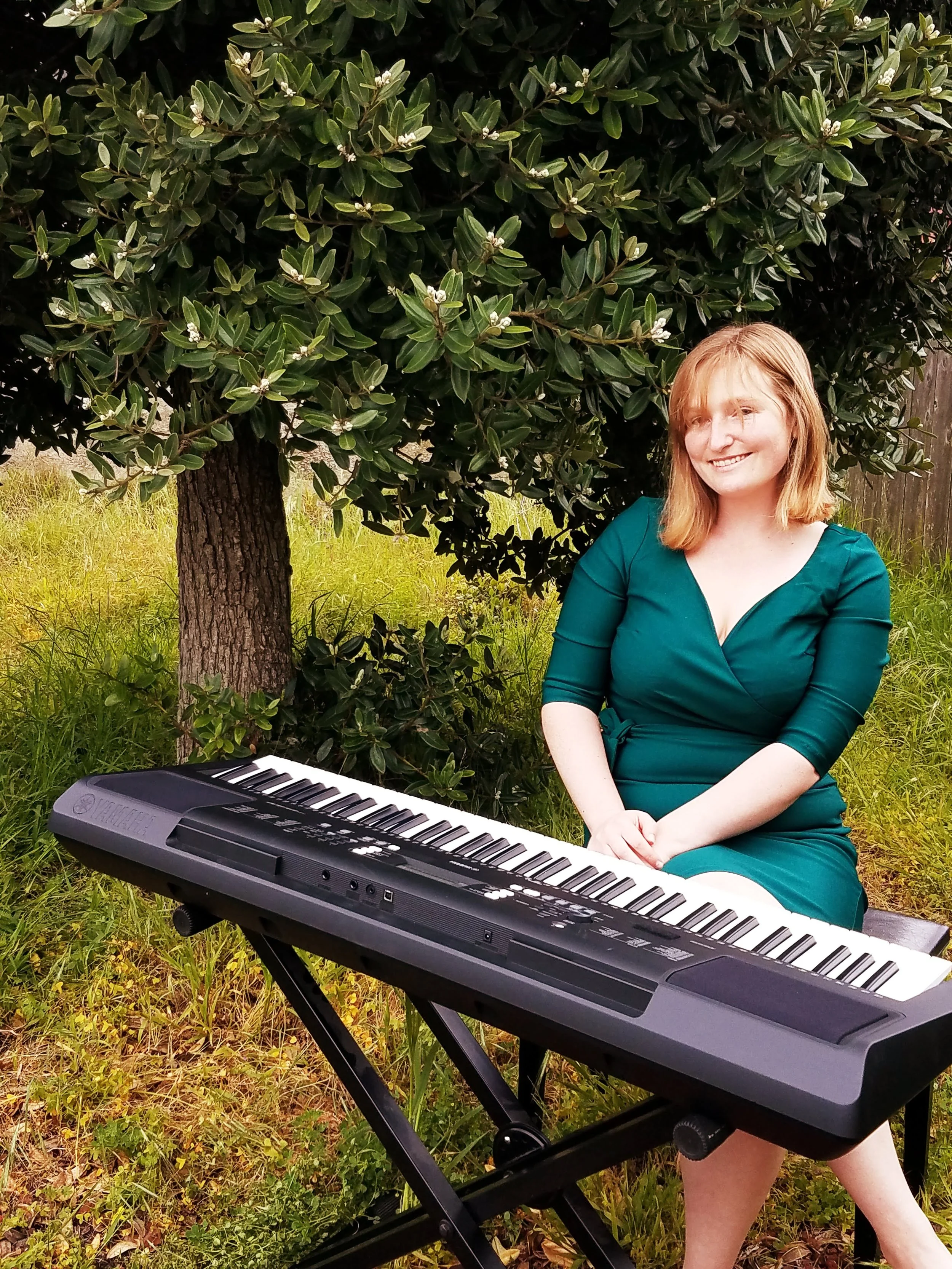
Lessons built on curiosity, not perfection
Too many times have I heard someone talk about the “mean music teacher” they had as a child, and how they grew up hating music as a result. I never want to be that teacher to anyone. My goal is not to craft students into the perfect performer, nor to force a proficiency through strict and rigid practice structures. Instead, I aim to work with my students to find where their interests lie, and curate their lessons to best suit them. I teach students of all ages and skill levels, including beginners. I hold a BA in vocal and piano performance from Humboldt State University, California, and I have 10+ years of professional music education experience and professional performance experience.
Skills and Specialties
-
One of my specialties is working with students who are neurodivergent, including those on the ADHD and Autism spectrum. As someone with both ADHD and Autism, I know firsthand how powerful music can be as a grounding, creative, and fulfilling outlet. Weekly music lessons can also provide a consistent, supportive space that encourages emotional regulation, communication, and personal growth.
-
While I teach students of all ages, I’m often appreciated for my gentle, patient, and affirming approach with younger kids. I work to facilitate a healthy balance of silliness and productive learning through talking, playing games, and offering incentives. I also work hard to ensure that the student feels safe to be themselves and make mistakes.
-
I studied piano alongside voice, and I often use the piano to accompany myself while singing. I love teaching students how to accompany themselves. It can be a great tool for the older student who’s interested in gigging or the younger student who wants to sing along to their favorite song. Or maybe you have a different reason to accompany yourself? I’d love to hear about it!
-
Music Theory Is the study of the fundamental elements that make up music, such as notes, scales, chords, rhythm, melody, harmony, and form. It provides the framework and "rules" that explain how music is structured, allowing musicians to analyze, create, and communicate musical ideas. It is the grammar of the language of music, and I incorporate ongoing music theory education into all of my lessons.
-
Have you ever wanted to turn a song from one of your favorite bands into a piano solo? Or maybe you like the idea of “jazzifying” a popular song? These are both forms of music arranging. Music arranging is the act of taking an existing song and changing elements of it to achieve a desired effect. Many people (including myself) have a lot of fun arranging songs. Arranging combines theory (especially chord theory) with creativity, culminating in the rewarding feeling of having made a song “yours”.